



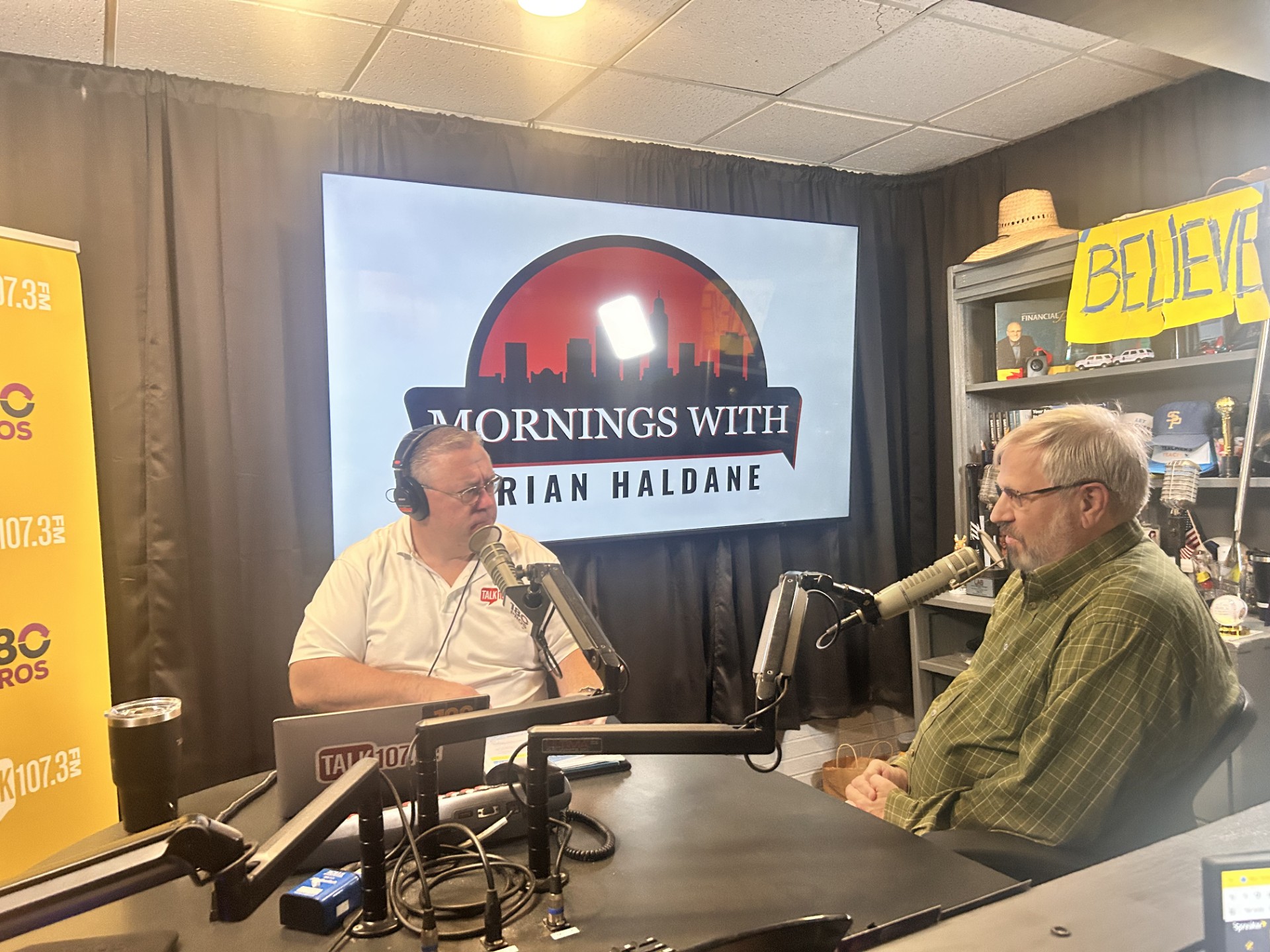



Scott Castleman of the Gulf Coast CCS Alliance joined Mornings With Brian Haldane to discuss the growing carbon capture and storage (CCS) industry and what a major ExxonMobil project in Southeast Texas could mean for Louisiana.
ExxonMobil CCS Project Marks Major Milestone
The Texas Railroad Commission recently approved a Class VI injection well permit for ExxonMobil’s Rose CCS project in the Golden Triangle region of Southeast Texas. Castleman described the approval as an important milestone for the carbon capture industry.
The project covers approximately 13,000 acres and could generate billions of dollars in regional economic activity. Castleman said the investment could benefit landowners, local governments, schools and emergency services while supporting new industrial development.
Why the Gulf Coast Is Ideal for CCS
Castleman explained that the Gulf Coast has three major advantages for carbon capture and storage: a large concentration of industrial facilities, an established CO2 pipeline network and favorable geology.
The region already contains more than 40% of the nation’s existing CO2 pipelines, according to Castleman. Its geology also features porous underground rock formations capped by layers of rock that can contain injected carbon dioxide.
He said companies increasingly face demand for lower-carbon products, including steel, concrete, plastics, power and other manufactured goods. CCS can help industries reduce emissions while continuing to produce products that customers need.
Louisiana Faces a Competitive Opportunity
Louisiana received federal approval to regulate underground carbon storage before Texas, but Texas has now moved ahead with its first major permitting milestone.
Castleman said Louisiana must balance careful regulatory review with an efficient permitting process as companies evaluate where to invest.
He noted that dozens of CCS projects have been proposed across Louisiana and Texas. For Louisiana, the emerging industry could complement the state’s longstanding energy and manufacturing sectors by supporting lower-carbon production, new investment and jobs.
Castleman said CCS does not replace Louisiana’s traditional industries. Instead, he argued, it can help strengthen and modernize them for future markets.